Project Identification
KSP(Knowledge Sharing Program)
The Knowledge Sharing Program (KSP) shares Korea’s economic development experience and knowledge with partner countries to support their economic and social development. It also supports Korea’s external economic policy and promotes bilateral economic cooperation.
Governance
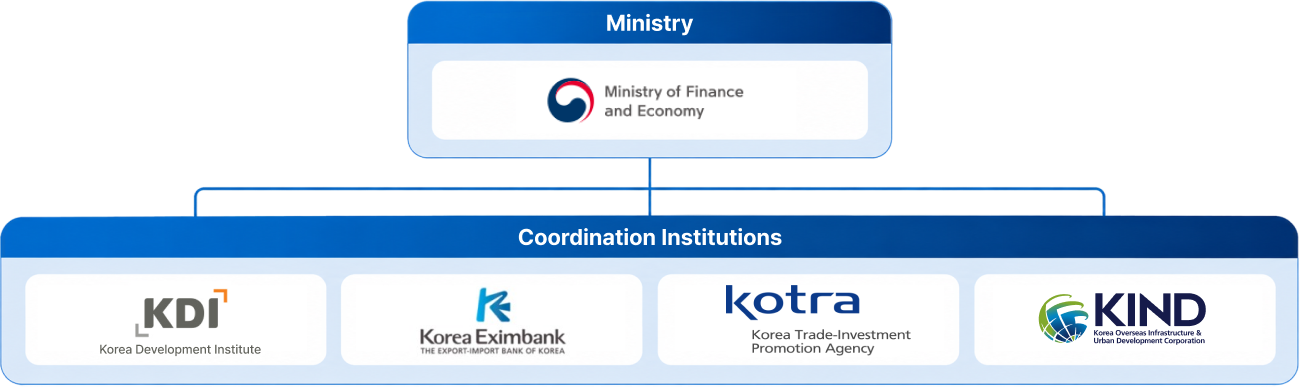
Implementation Framework
As an official intergovernmental cooperation program, KSP builds on trust and partnerships among participating institutions to define partner countries’ needs and shared objectives.
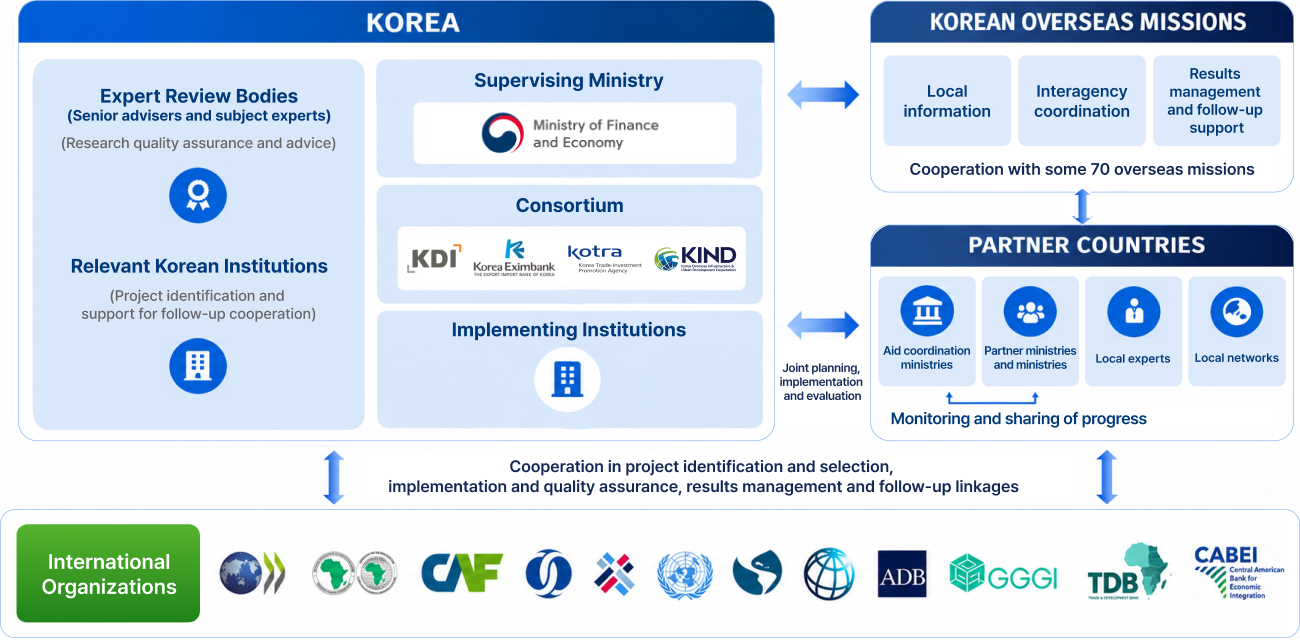
Cooperation Modalities and Project Cycle
| Cooperation Modality | Project Type (Duration) |
Objective |
|---|---|---|
| Policy Advisory Services | Bilateral Policy Consultation (1 year) | Develop practical policy options through field surveys and joint research. |
| Capacity-Building Training (1-2 weeks) | Provide training for partner-country policy practitioners to strengthen policy planning and implementation capacity. |

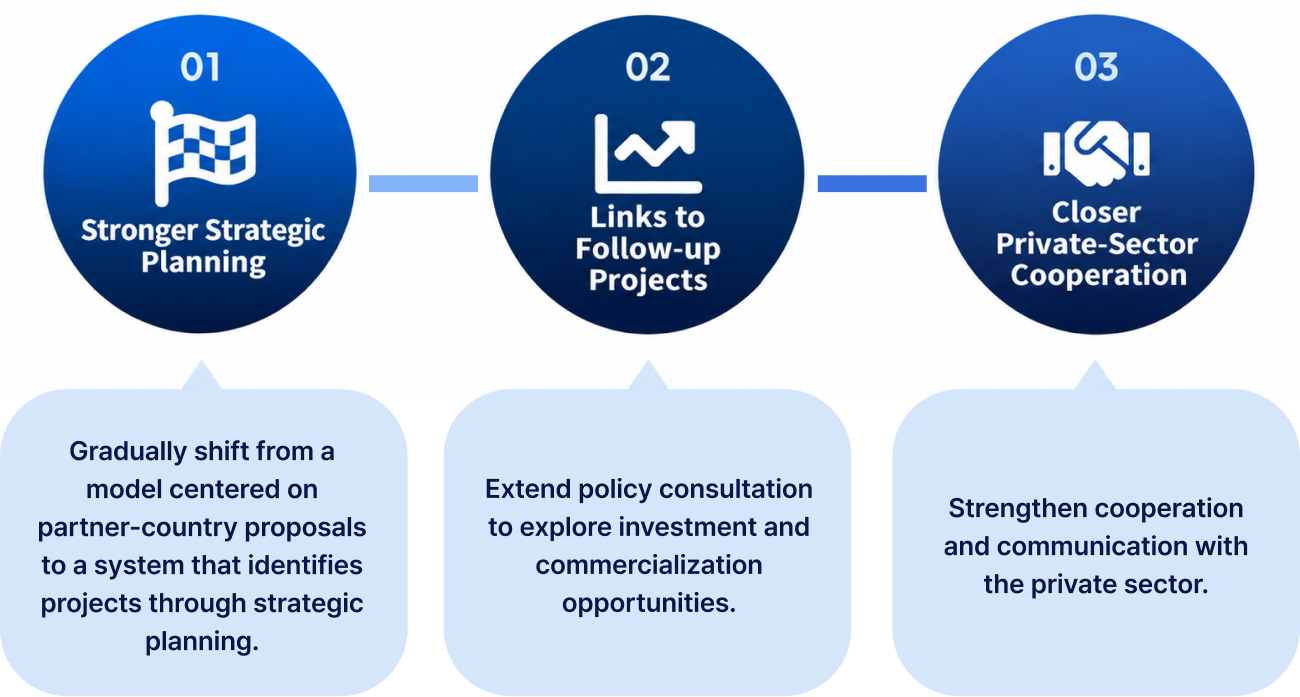
Strategic Direction
KSP is moving toward a framework that connects strategic project planning with follow-up projects.
Partner Countries and Projects
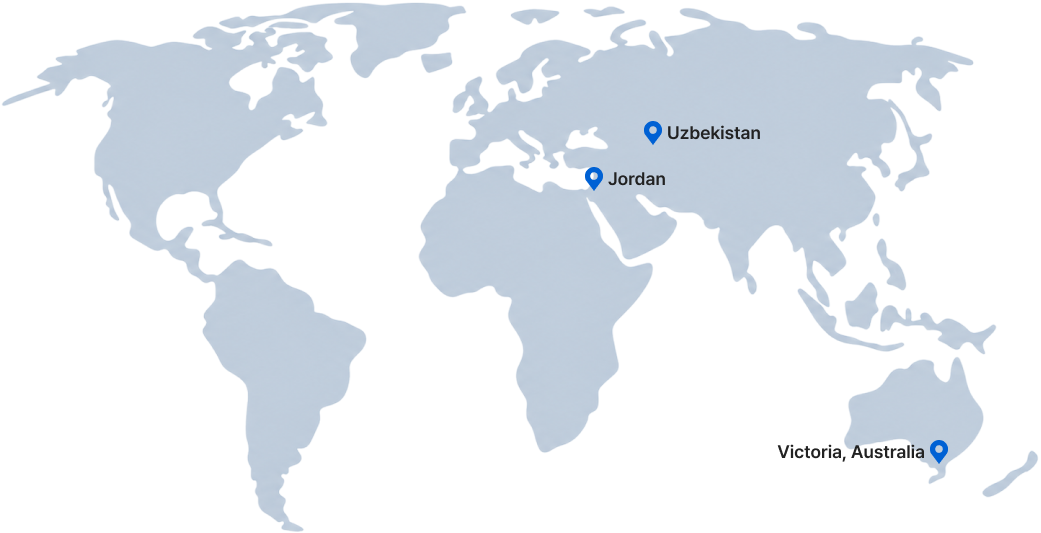
| Country | Jordan | Uzbekistan | Victoria, Australia |
|---|---|---|---|
| Project | Strategy for Jordan’s Transition to a Green Digital Economy | Development of a Road Safety Improvement Strategy for Tashkent, Uzbekistan | Policy Study on Building a Victoria-Korea Renewable Fuels Business Ecosystem |
| Objective | Improve energy efficiency in Jordan’s ICT sector and strengthen digital capabilities in the public and private sectors. | Support improvements to the road safety system to ensure safe mobility for residents of Tashkent. | Develop a policy roadmap to accelerate decarbonization in hard-to-abate sectors and expand bilateral cooperation on renewable fuels. |
| Scope of Work | Provide policy recommendations for a green digital economy strategy and conduct a preliminary feasibility study on sustainable digital infrastructure projects. | Develop a road safety system and improvement strategy, and prepare an operational plan for a smart road safety system using new technologies. | Provide policy recommendations for a renewable fuels policy roadmap. |